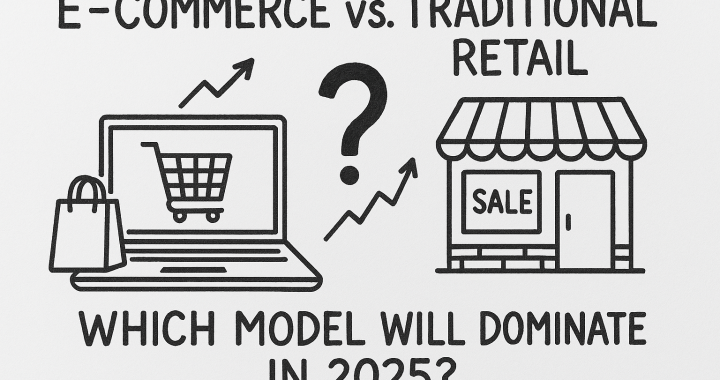
E-Commerce vs. Brick–and–Mortar Retail: Which Model Will Reign Supreme in 2025?
With each passing year, the distinction between e-commerce and brick-and-mortar retail grows fainter—but the question lingers: which model will be at the top of the game in the next few years? The answer is not a mere physical store vs. online shopping affair; it’s about how companies leverage digital marketing to draw, engage, and convert consumers in a world that is growing more interconnected by the day.
Let’s get into trends, challenges, and what digital marketers need to keep their sights on to be ahead.
1. The Age of E-Commerce: A Digital Marketer’s Playground
E-commerce has seen explosive growth over the past decade, and it’s far from slowing. With Shopify, Amazon, and WooCommerce making online selling easier than ever before, digital marketers are blessed with more tools and information than they can handle.
Why E-Commerce is Booming:
24/7 availability: Your online store is always open.
Global connectivity: Sell to customers worldwide.
Data-driven insights: Monitor every click, cart, and conversion.
Personalized experiences: AI-powered recommendations and retargeting.
Digital Marketing Tip: Leverage advanced targeting strategies such as dynamic ads, email automation, and influencer marketing to deliver personalized shopping experiences.
2. Traditional Retail Isn’t Dead—It’s Evolving
Even with the digital revolution, physical stores continue to be important. In fact, phygital experiences (physical + digital) are transforming the way traditional retail works. Customers love to have touch experiences, instant gratification, and personalized service.
Why Traditional Retail Still Matters:
In-person experience creates trust and brand affinity.
Instant product access cuts delivery time.
Local community presence increases loyalty.
Digital Marketing Tip: Take advantage of local SEO, Google My Business, and geo-targeted advertising to generate foot traffic to brick-and-mortar stores.
3. The Hybrid Model: Best of Both Worlds
By 2025, the most effective brands will be the ones that seamlessly integrate online and offline experiences. Consider click-and-collect, QR codes in stores, and inventory tracking in real-time across platforms.
Example Tactics:
Omnichannel campaigns: Cohesive messaging across email, social, web, and store.
AR try-ons in-store or at home through apps.
Real-time customer service through chatbots or live agents.
Digital Marketing Tip: Build connected funnels where online behavior inspires offline action and vice versa.
4. What the Data Says: Who’s Winning?
Industry predictions indicate that by 2025:
E-commerce will represent more than 25% of worldwide retail sales.
Mobile commerce (m-commerce) will be the leading online sales.
AI and machine learning will make personalization like never before.
But physical retail isn’t disappearing—it’s just evolving. Those stores that make investments in digital transformation will stay in the game.
5. So, Who Will Reign Supreme in 2025?
E-commerce might be taking the lead when it comes to growth and scalability, but physical retail is far from dead. The true winner? Brands that marry both models with intelligent digital marketing strategies.
The future is for marketers who know consumer behavior, who use data, and who deliver frictionless, exciting experiences—either online or offline.
Final Thoughts
By 2025, the debate won’t be about “e-commerce or physical retail?” It’ll be about “how do we leverage digital marketing to make them one?” The companies that realize this will not only rule—they’ll redefine retail.